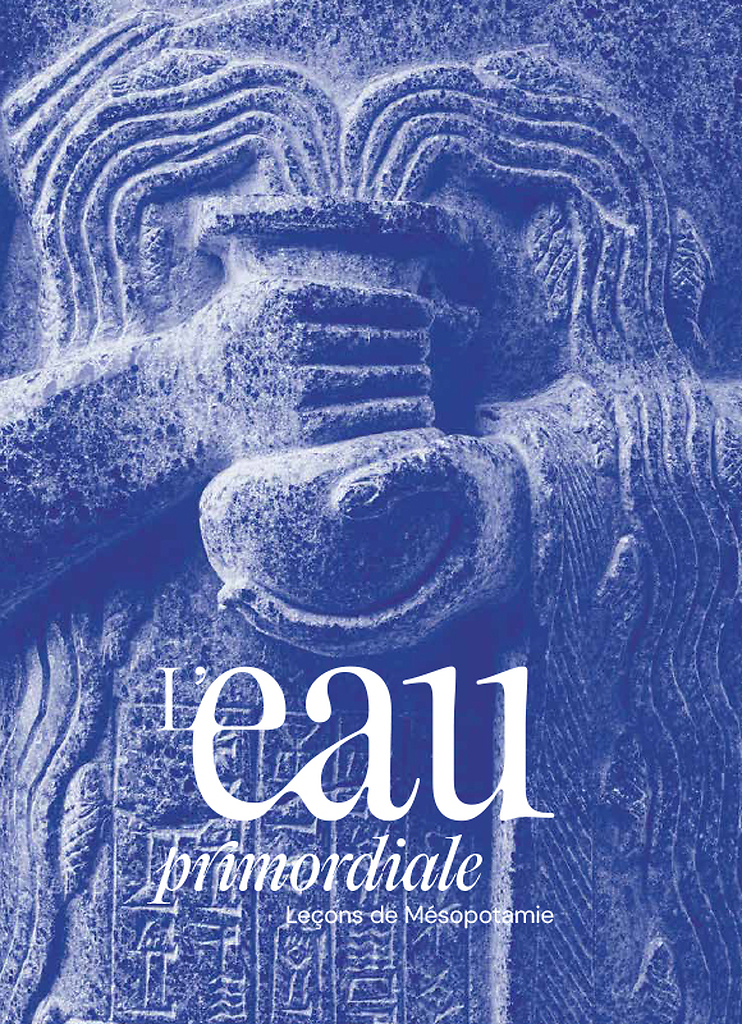
The exhibition catalog was published in conjunction with the exhibition "Primordial Water: Lessons from Mesopotamia," which ran from May 20 to March 15, 2027.
A source of life and prosperous civilization as well as of power and destruction, water is an essential element of human life. Today more than...
The exhibition catalog was published in conjunction with the exhibition "Primordial Water: Lessons from Mesopotamia," which ran from May 20 to March 15, 2027.
A source of life and prosperous civilization as well as of power and destruction, water is an essential element of human life. Today more than ever, it is a scarce resource and a fundamental issue in the preservation of ecosystems. By examining the lessons of ancient Mesopotamia, this book also offers a reflection on contemporary environmental concerns. Crossed by the only two rivers known from the biblical paradise, the Tigris and the Euphrates-whose importance and dangers may have inspired the myth of the Flood-ancient Mesopotamia is the land where irrigation was invented and developed.
These early human attempts to control water through the artificial transformation of the natural environment contributed to the development of the very first hydraulic structures: canals, bridges, aqueducts, drainage networks, and so on. These technical advancements permanently altered the relationship between the inhabitants and their land, as well as the social, political, and economic organization of the first Mesopotamian cities.
Setting out to explore this vanished world, where water was ever-present-so different from the regions that have since become particularly arid-this catalog offers a reflection on the lessons that might be drawn from the ancient Mesopotamians' relationship with water. From the divine realm to the human world, via the unique natural landscape of this territory, it takes us on a journey to the heart of this primordial element.
French
240 pages
Lienart Editions / Co-published with the Louvre Museum