Castings production
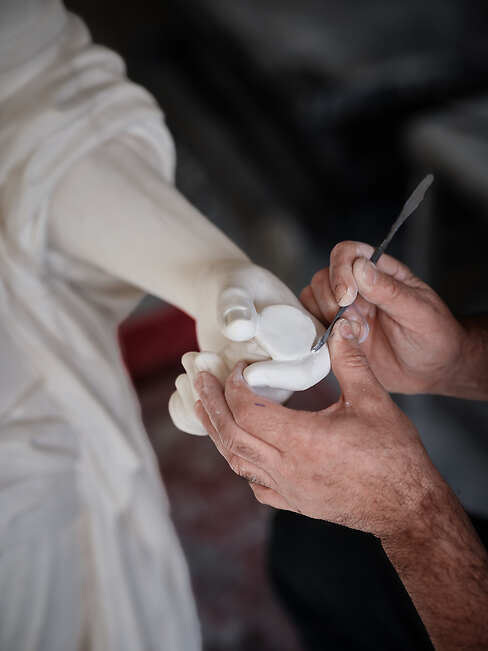
Expertise at the GrandPalaisRmn art workshops
Castings: replicas that shine with authenticity
The casters and sculptors at the art workshops of the GrandPalaisRmn have inherited centuries of expertise, employing their vast skillsets in order to reproduce some of the most beautiful statues and sculptures in art history for the Louvre. Both masters of their craft and custodians of a rich collection of 6,000 moulds, the GrandPalaisRmn sculptors and decorative artists are equally passionate about passing on their skills to a new generation of artisans. They are driven by rigour, aspiration and innovation.
The different stages of mould production
Because it will be the basis for one or several copies faithful to the original work, moulding a sculpture requires a series of orderly and precise steps.
Making a physical imprint
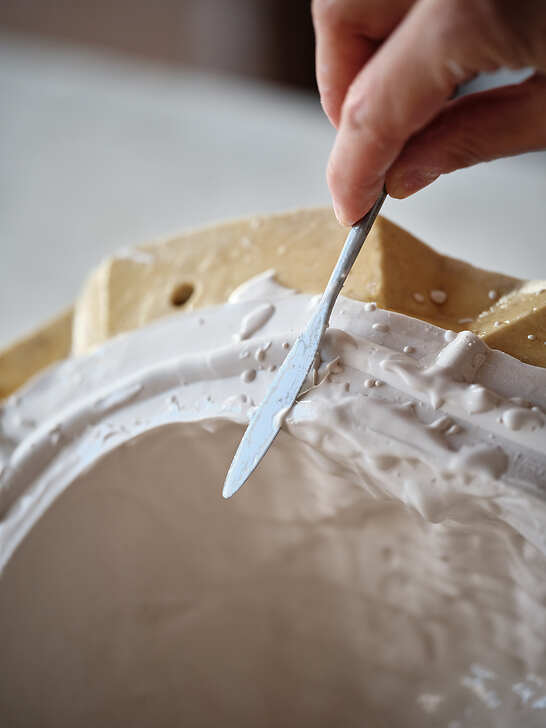
Produced from original works of art, the physical impression is a delicate operation carried out by the artisans of the GrandPalaisRmn casting workshop. Because they can be fragile, these statues and sculptures are initially coated with a protective layer onto which the statue moulder applies two layers of liquid elastomer. Elastic, precise and easy to remove from the mould, this material requires expert application and can be thickened according to the dimensions of the area being moulded.
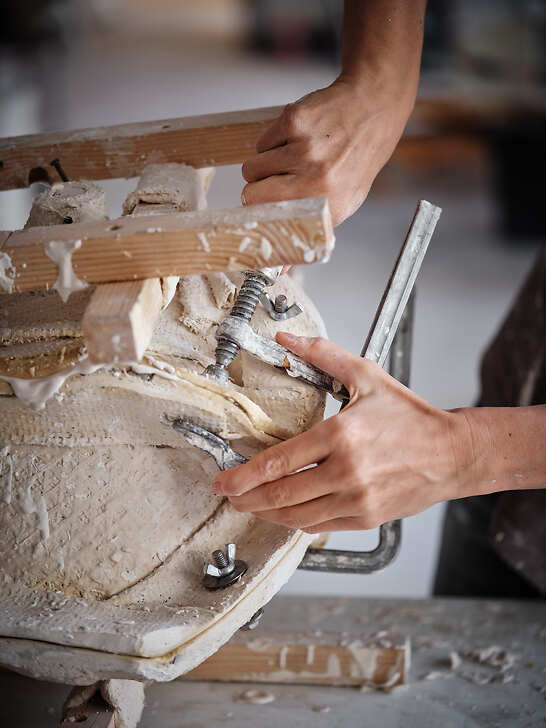
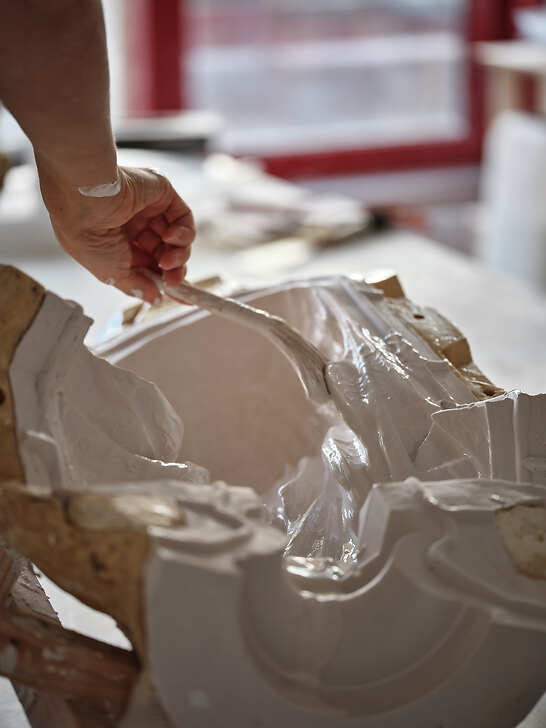
Once the work has been wrapped in elastomer, the artisans arrange plaster screeds to hold the material together when the assembly is removed from the mould. The latter are themselves supported by a wooden frame, which allows for safer handling. The final step in this meticulous process is the removal of the mould to reveal the original sculpture.
Producing a 3D imprint
New technologies offer an incredible range of possibilities for craftsmanship. These include taking 3D impressions. While they offer less precision than silicone elastomer, they are particularly used in two cases: when the original work is too fragile to be handled, or when casters wish to alter the dimensions of the reproduction, enlarging or reducing it according to specific needs and demands.
The casting process
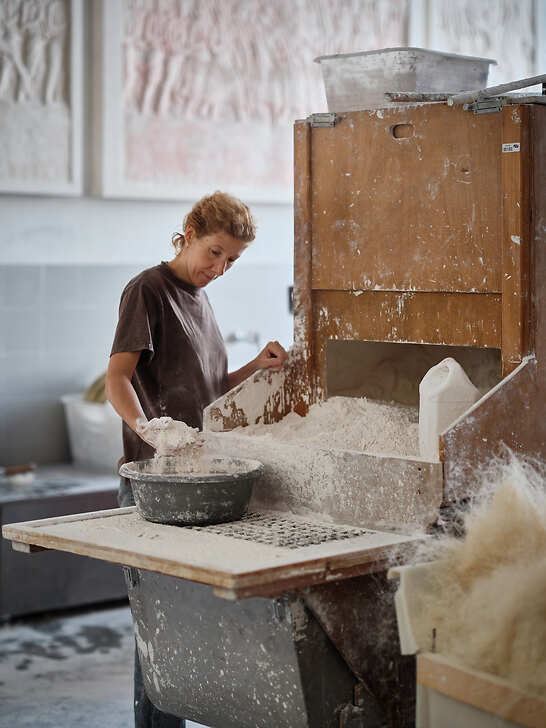
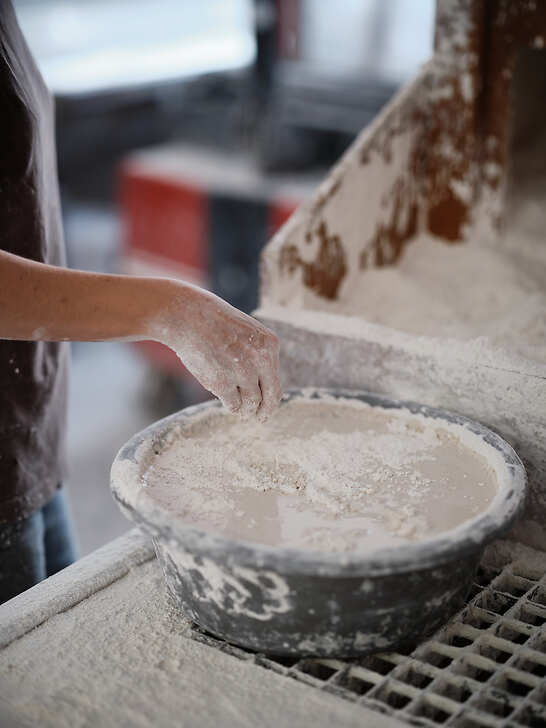
In plaster, resin, clay or bronze... While reproductions cast from the 6,000 or so moulds in the casting workshop are all produced to the same standard, they involve a variety of techniques. Often popular with artisans and casters, slush casting consists of a succession of steps and layers. Once the plaster has been poured into the bottom of the mould, a layer of oakum (plant fibres such as jute or hemp) reinforces the mould, which can also be supported by means of wooden or metal structure if the dimensions of the mould require it.
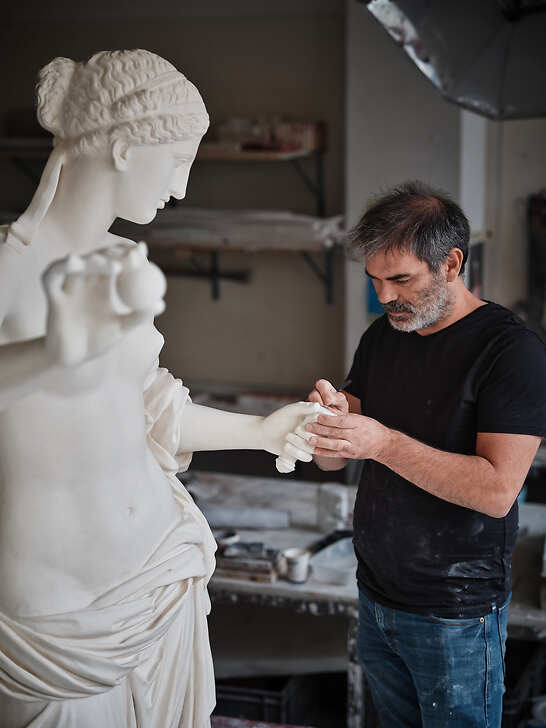
Only once the plaster has set, and is therefore solid, is the cast released from the mould. It then undergoes a scrupulous finishing process (for example, the 'seams', which indicate where the different parts of the mould meet, are deburred) so that every trace of manufacturing is invisible to the naked eye.
The patina
To ensure that each piece is as close to the original version as possible, the decorative artists apply a patina that reproduces the effects of ageing on marble, terracotta, bronze, etc. In consultation with the museum curators, and after a detailed examination of the original models, they execute this final procedure with a steady hand.
Some frequently asked questions:
- What material is used?
Our reproductions are made of resin reinforced with mineral powder. The pieces are solid, and the surface has a patina. They are all crafted by hand, from the molding process to the patina application and finishing touches.
- How does this material change over time, and what is its long-term durability?
Due to the high mineral content in our resin, this material is very stable. Our castings do not undergo any changes over time. However, the surface patina may be altered by abrasive contact (excessive moisture, cleaning products, or scratches from rings) or may change color if exposed directly to a heat source (such as a radiator or sunlight).
For over two centuries, our sculptors and casters have been creating reproductions of sculptures in strict accordance with the original works. Major museums, such as the Louvre, rely on our expertise in "casting" to reproduce their finest masterpieces.
Cultivating an environmentally responsible approach
Custodians of two centuries of art, the GrandPalaisRmn workshop also knows how to move with the times, especially in terms of sustainable development. Through its creations, it aims to combine heritage practice with innovation. In line with its commitment to environmental protection, the workshop therefore favours plaster for its castings, a natural material composed of gypsum and water from a local source.
Working with committed suppliers, the casting workshop is also researching new alternatives to traditional materials: coffee grounds and plant-based epoxy resin are some of these environmentally friendly solutions from which some casts have been produced.
All of these possibilities can also be made available for decoration and design. Bio-sourced marble stucco, produced by the artisans themselves, offers a major reduction in the workshop's environmental footprint, and a favourable alternative to marble, which can be energy-intensive in use.